There is no nation in the world that does not know wine, meaning that alcohol is always present in human life. Wherever there are people, there is alcohol. During sacrifices to the gods or during annual holidays, a lot of wine is wasted around the world. Each ethnic group and each locality has its own type of wine and its own way of enjoying it. Many famous wines around the world such as Vodka (Russia), Whiskey (USA), Rhum (Central America), Cognac (France), Sake (Japan), Mai Que Lo (China), etc. have existed for hundreds of years and are widely used in all continents.
In the past, people believed that alcohol improved health, refreshed the spirit, and sharpened the mind. The Romans called the god of wine Bacchus, and the Greeks called him Dionusos. Every year when there is a good harvest, people often make offerings to the wine god and drink a lot of wine to celebrate. Christians call wine the blood of God, a sacred water. Many peoples around the world have used many different types of ingredients to make wine. In Mexico, wine is made from cactus juice. In India wine is made from coconut. In France and Italy, wine is made from grapes and apples. In our country, wine is distilled from rice, tubers, fruits…
Alcohol used in appropriate doses has a stimulating effect on digestion. For older people, drinking a glass of wine before a meal will cause the stomach glands and pancreas to secrete more. That's why Westerners have the habit of drinking an aperitif before meals. Just one sip of wine is enough to warm up the body, circulate blood, and refresh the spirit. However, alcohol is a double-edged sword. Many people drink wine instead of rice. Just a plate of bait and a bottle of wine is enough to fill you up! Some people only drink alcohol and call it vegetarian. Whenever they have the opportunity, they gather together to drink mantras and uncles together with irresistible alcohol until they get drunk. Drinking like that is harmful. Alcohol has led to discord between friends and brothers. Alcohol has caused many tragic accidents. And because of alcohol, so many families have been broken and lost their happiness. That's why many countries have laws banning alcohol consumption for minors or only selling alcohol on holidays to prevent drunkenness, which leads to crime.
During the market economy, wine companies sprouted like mushrooms. These are Da Lat strawberry wine, Hanoi apricot wine, Thai Nguyen plum wine, Buon Ma Thuot coffee wine, Nang Huong wine, hot wine, national wine in the South. The names of wines continue to follow each other and the drinking world increasingly develops into a movement. Not only that, famous wine villages in our country also include Mo village wine, Van Village Wine in the North, Bau Da wine in Binh Dinh, Go Den wine in the Southeast region, Can wine in the Central Highlands, Bac Ha wine in the Northwest.
Mo village wine has a long history of about six or seven hundred years. Its homeland is in Bach Mai, Hoang Mai (Hanoi). In the past, this area was a vast apricot forest. People here specialize in making apricot wine. Mo village wine is famous throughout the country, it is pure, noble and intoxicating. When drinking apricot wine with snacks, it will have a strange taste, and it will be ruined. Wine connoisseurs and drinkers of Mo village wine only sip green apricots.
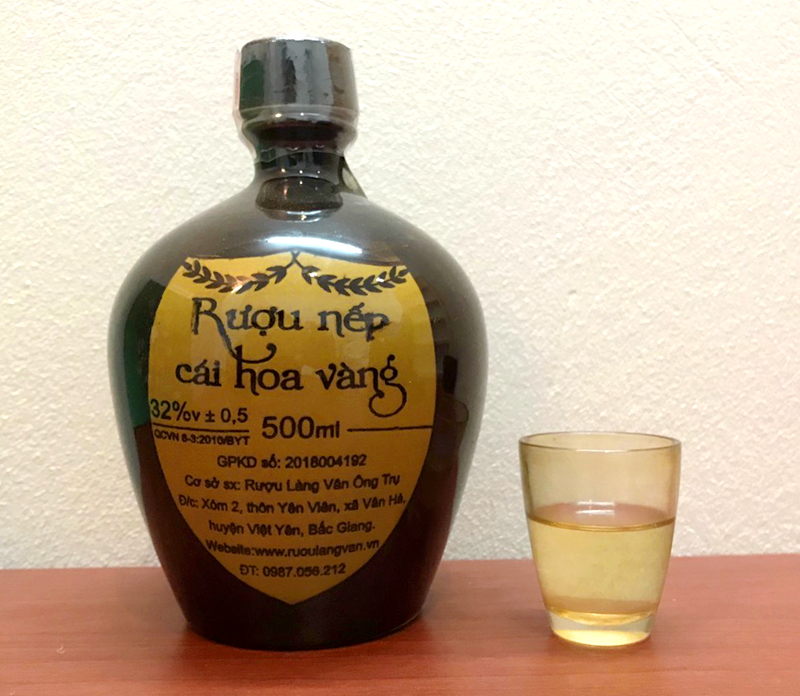
Around 1936 and 1940, Van Village Wine was equally famous and highly appreciated by Western visitors. Today, Van Village Wine is still popular because it is a delicious wine with a happy ending. Again, during the French colonial period, there was a type of wine that entered folk songs and folk songs. That's toothpick wine.
Give me a basket of sticky rice,
A fat pig and a jar of wine.
Toothpick wine is the first distilled wine. If you distill 10 liters of regular wine, you will only get 1 liter of wine. It's first class delicious. People put wine in a bottle. The wine is not filled completely and the mouth is sealed. People shake the bottle vigorously to create foam. The wine toothpick bubbled like a ring. When the bottle is left standing, the wine toothpicks sink immediately. That is a sign of genuine toothpick wine.
At that time, the French colonialists banned people from making wine. That's why there are many types of illegal alcohol released on the market. For example, national wine is sold quickly and quickly. When wine is horizontal, you must try to go sideways and turn it off. As for horizontal wine, the dippers put the wine in buffalo bladders tied across their stomachs, pretending to be pregnant and selling them everywhere.
Binh Dinh is famous for Bau Da wine. This wine has a very high concentration, drinking it is so hot that it burns your neck, but it is a wine with a good taste. Drinking a lot doesn't give you a headache and makes you feel drunk. Bau Da wine is produced in Nhon Loc commune, An Nhon district, Binh Dinh province. Tourists going from the North to the South, when passing the intersection of Ba Gi Bridge, will see cans of Bau Da wine stacked along both sides of the road. This wine is mass produced and consumed all over the country. Recently, it was put into bottles that look like foreign wine, priced at only 20,000 VND/bottle and sold in Southeast Asian countries.
In the South, Go Den rice wine has been famous for many years, dominating both the South Central and Southern markets. Nowadays, Go Den wine has become the junior wine of Bau Da wine because its concentration and deliciousness cannot compare to its elder brother in Tay Son land. In general, there is plenty of wine on weekdays, but during Tet the wine village flourishes even more. Shoppers are very miserable. If you are not a wine connoisseur, it is difficult to choose a suitable wine to welcome friends to your home to visit in the spring.
Con Giang