Van Village is located right next to Cau River. Rows of bamboo running along the river cover Van Village with a smooth green color. The fields close to the foot of the dyke in the dry season after the harvest are a holy place for buffalo herds to roast potatoes, bury cassava, fly kites, and do all kinds of mischievous things of school age. It is a resting place to discuss crops and business for women who work hard around wine pots and vegetable beds. It is a dating place for boys and girls excited about spring.
Many people have crossed the Cau River and drank Van Village Wine, but few know that Van Village Wine must be cooked with Cau River water to be delicious. Located in this charming river area, yellow-flower glutinous rice grown in fields with enough water for the rice plants from the time they are still young, until they are planted, the fermentation starter blocks are kneaded by skillful women's hands into small, regular cakes like the shape of coins strung on a string, and especially the water of the Cau River, have created the unique wine of Van Village, creating the soul of Van Village Wine. There were people from here who brought the entire wine making process and experience of Van Village to Phu Tho, Nam Dinh, Binh Duong, Long Khanh, but because of the lack of Cau River water, they could not create the quality of wine, the soul of Van Village's wine, like it was brewed here, even though, it was still the same people, the same hands, the same rice, the same yeast. That soul is the pure fragrance, the rich flavor, the wine as clear as crystal. When you drink Van Village Wine, you feel as smooth as falling into a dream. You get drunk and don't know how to get drunk. Being drunk in Van Village means being drunk and dreamy. After a good night's sleep, you see people gain strength, the spirit is refreshed, and heaven and earth are at ease. Being drunk in Van Village is being drunk, like the drunkenness of their mandarins, passionate, passionate, affectionate without being sloppy or indulgent, the drunkenness of debauchery.
When did Van Village and Van Village's wine originate? It is difficult to get an exact answer, because the divine and clan genealogies have been destroyed by war. A qualified official of this village, based on the cultural and educational development in the area, estimates that Van Village has about five or six hundred years of history, because Tho Ha communal house, next to Van Village, has been identified by scientists from the Le dynasty, Khuc Toai village on the other side of the river, has a doctor who passed the exam in 1469, worked as a mandarin under King Le Thanh Tong, has an epitaph in the Temple of Literature and is worshiped by the villagers in a separate space at the pagoda. village. The formation of those villages is similar to Van Village in terms of time. The villages in this area are very close to each other. In the spring, before Tet is finished, the villages here are excited to celebrate. On the third day, Yen village festival, on the fourth day, Do village festival, on the fifth day, Choi village festival, followed by Tho Ha and Van Village festivals. On this occasion, the girls of Van Village sell wine and cover it tightly with banana leaf buttons to preserve the wine. Every time they open it, the scent is fragrant. The villages in this region have a festive relationship with each other. Tho Ha pottery village makes all kinds of pots, jars, jars… to serve the stages of storing, transporting, measuring, and selling to Van Village. Dai Lam village bought rice from other places to sell to Van Village, thereby forming the profession of being a neighbor in Dai Lam. People in the villages in Dai Lam. People in the villages are the ones who store Van Village's wine to sell in all directions.
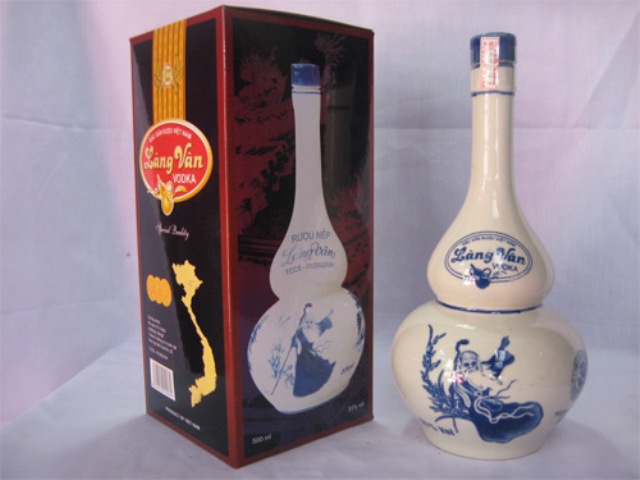
For more than a century, Van Village Wine has been famous and known everywhere, from the Northern Delta and midlands, spreading to Quang Ninh, Hai Phong, Thanh Hoa and even the South, competing with Go Den and Long An wine of the Mekong Delta. It is said that during the French colonial period, Van Village Wine was used by the French wine company Font-Ten as base wine for mixing, with almost zero toxicity after many tests using sophisticated equipment, and won several prizes in competitions, like the current exhibition, held in Hanoi and Paris and is strongly consumed in France. Van Village Wine once followed labor cooperation workers, students, interns, and researchers to the Soviet Union in the eighties of the last century. They poured Van wine into a bottle of "Lua Moi" known as "Voc ca" Viet Nga, to give it to Russian friends in the land of white snow in the cold winter. A few years ago, a group of Japanese experts came to study Van Village Wine right at its birthplace, discovered that cassava wine was highly toxic, rice wine had no toxins, and bought hundreds of liters to bring back to the country. Besides drinking, no one understood what other purpose it had.
During the subsidy period, although it was banned, Van Village Wine still existed and developed throughout the villages and urban areas, everyone drank Van Village Wine, but the transportation could not be publicized, so it was called "national wine".
Nowadays, Van Village Wine seems to be just cassava wine, wine made from cassava, at very cheap prices. Cassava wine appeared during the subsidy period. At that time, Bac Ninh station was full of dried cassava from Lang Son and midland provinces, then agricultural vehicles and carts rushed to Van Village.
For some unknown reason, nowadays, many people like to drink cassava wine, but forget the famous rice wine of Van Village that was awarded "Van Huong beautiful wine" by the king several hundred years ago. Is it true that during the market economy, some people prefer simplicity and simplicity, like in love there are not many moments of dreams, suspense, and anticipation to "get drunk with the moon and flirt with the clouds"?
However, in Van Village today there is still an eighty-year-old woman in the year of the Horse who has never made cassava wine, although she knows how to make wine from all kinds of ingredients. He only makes rice wine and yellow-flower glutinous rice. Maybe he doesn't want to lose a precious wine that has been ranked since ancient times. That's Mr. Tom, named after his eldest son, Nguyen Trung Tom, born in 1934. He has seven children, Nguyen Trung Tuan is the second son, with the rank of colonel, working in Ho Chi Minh City. The next two sons and two daughters married the village and the youngest son specialized in making wine, but no one was as skilled as him.
I had the opportunity to meet him many times in the dormitory of Han Thuyen High School, Bac Ninh town, where his second daughter-in-law taught for many years, before moving to Ho Chi Minh City and meeting him in Van Village. He is slim, his oval face is slightly shrunken because of years of victory, his eyes are wide open, always looking up at the guests. All year round, he wears bright brown clothes, dark pants, a turban, and an agile gait, somewhat busy. When I met him, I immediately knew that this was a man of work. From Van Village, when he came down to visit his newborn grandchild, he brought everything for him and took good care of his daughter-in-law, but he only stayed for a while. The son wanted her to stay with him overnight, but refused to let her go home as planned. She quietly left the dormitory, went to the main road, and waved the car home. The wine jar, the sticky rice steamer, and the yeast worms hanging in the kitchen seemed inanimate, but to him they contained many memories. He missed them, perhaps afraid of spoiling the wine, afraid of missing an appointment with a customer.
Mr. Tom learned the craft of making wine when he was just over ten years old, his mother taught her how to choose rice, cook rice wine, make yeast, put a pot of soup on fire, and taste wine. If you want to know if the wine is good or not, whoever tastes the wine is mediocre. If you taste a little bit at a time, it's easy to mistake the real wine for the fake one. To try wine, you just need to pick up the bottle and shake it; Shake and rub in a circular motion, see how the wine toothpick turns out, until it hurts, the wine toothpick swirls into a pointed shape from the bottom to the neck, like an inverted triangle, then it is good wine. He learned sophisticated skills from his mother and neighbors, but because of the necessary personal qualities of a winemaker and his own cunning and ingenuity, he grasped many winemaking secrets. After he passed away, there was probably no one better than him. Looking at the pot of rice and wine being opened, he could guess the concentration and how good the wine was. Wine making is truly a feat. At night, the weather suddenly became cold, so he quickly got up and warmed himself up with some rice and wine. How long a batch of wine is brewed depends on the weather, whether it's hot, cold, rainy, or stormy. You can move around a bit, but you absolutely should not rush the wine to make it tasteless or overwork it, causing your neck to dry. Even if guests from far away came to urge him, put in more money, and urged him to cook quickly for the right amount, and the guests hurriedly got off the boat, he shook his head and continued his work as if he hadn't heard anything. The virtue and conscience of a winemaker like him are rare. The whole village is now the only rice wine maker left. Perhaps that is why it is said that he is the soul keeper of Van Village. He often said, the rich are also rich, the poor are also poor, just follow your ancestral karma. During the Western era, no one was afraid. There were times when times were difficult, I thought I would have to quit my job, but then I kept making this wine forever. This profession is not afraid of anyone starving to death.
Someone asked if Van Village hid their profession. He said that in the past, there was still a custom that on the fourth day of Tet, the head of a family, one person in each family, went to Roc Pagoda to drink blood and swear an oath not to pass on the profession to the world or to daughters or women from other clans. It's different now. Fifteen years ago, a professor was about to retire. He came to ask for a lecture. He said: "I'll accept it. You can stay here for a few days and a half a month. When you see how I do it, you'll know how to do it." The first day, he called into the kitchen and his son carried a thirty-five pot of sticky rice, dumped it on the stove, and the rice was all crumbly and not sticky. The professor asked, "Sir, why isn't there a fire?" "If there's a fire, you'll lose money!". "Each liter of wine only earns a few hundred dong, everything has to be done skillfully." As for cooking, the professor also felt that he was not talented enough, so he said goodbye: "Well, I can't learn this profession." As for his wife, who is a senior pharmacist, she decided to ask him to let her learn the craft of making yeast. He agreed, teaching in great detail how to hold the jar, wash the mortar, clean the mortar, how to choose additives, pounding must be in a rhythm, brewing grasshoppers must choose the weather, when it's hot and hard to brew on rainy days, must be hung up in the kitchen for a full day, full month… After three days, seeing that the story was too complicated, the senior pharmacist asked for a leave of absence, giving up the idea of producing yeast industrially. Unlike many other families in Van Village, they make cassava wine to get rich, buy parabolic antenna TVs, refrigerators, and build high-rise buildings. Mr. Tom only makes rice wine. His house is still as simple as it was thirty or forty years ago. He ate frugally, loved his children and grandchildren, and cherished his relatives. Making rice wine for him is a karma, perhaps he wants to keep a wine with unique characteristics of Van Village, wants to keep his ancestral karma and that is a sacred joy for him. At the age of eighty-five, if his age is a blessing from heaven, then Mr. Tom deserves to live a few more years so that the people of the world can continue to enjoy the essence of Van Village Wine.