1. GENERAL INFORMATION
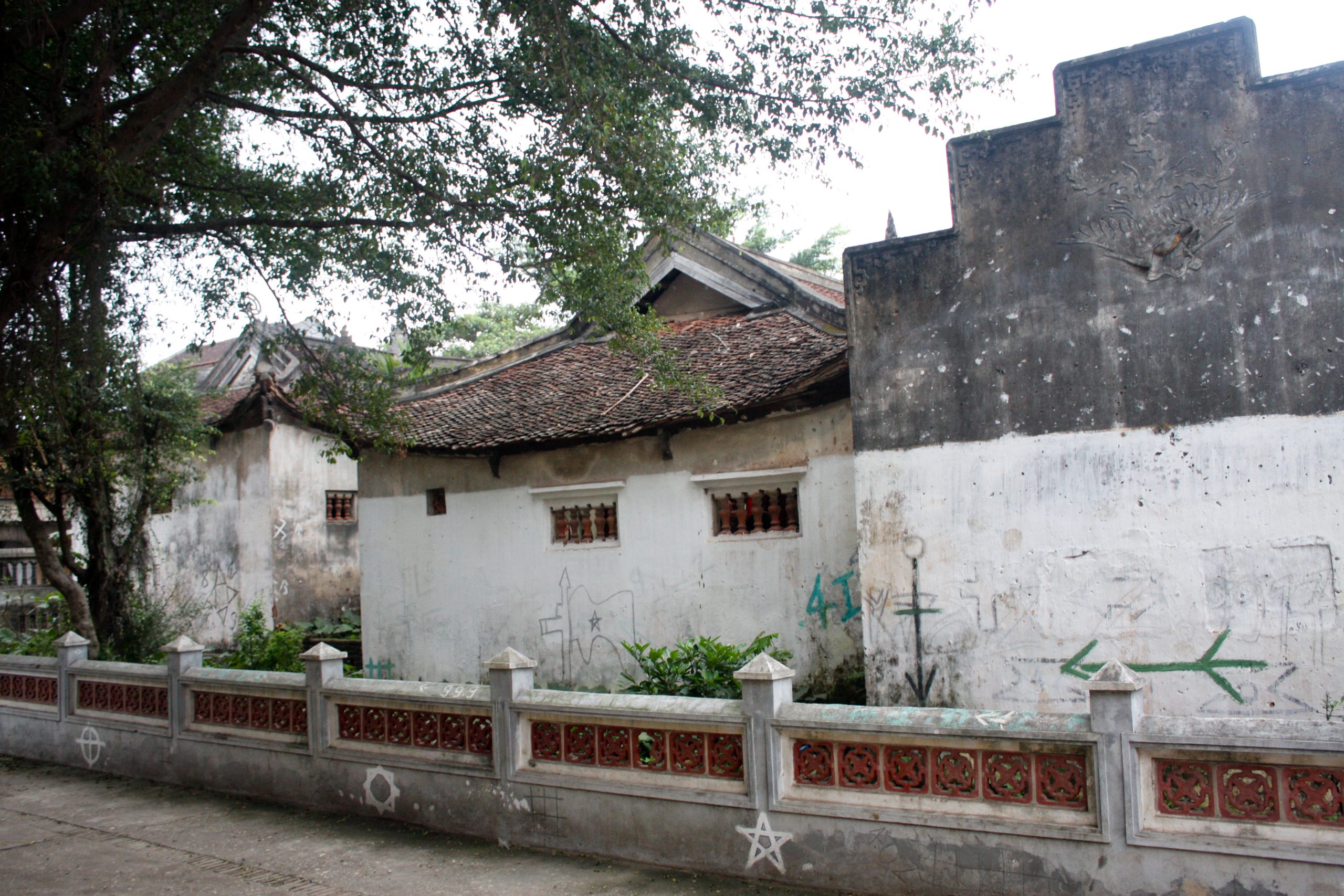
Name: Van Village Temple
Other name: Main Temple of Yen Vien village
Specific address: Yen Vien residential quarter, Van Ha Ward, Bac Ninh Province
Geographic location and landscape space:
Location description: The temple is located next to the Cau River in the west direction, overlooking the Van wharf to Dai Lam village.
Feng shui elements: Van Ha village has the literal name Yen Vien, running more than 1km along the North bank of Cau River, opposite Dai Lam village on the other side of the river. Because three sides border the river, if you want to enter Van Village, you have to go through three ferry crossings in the East to Qua Cam, to the West to Dai Lam, and to the South through Tho Ha village. There is a road in the north of the village that goes along the Tien Lat mountain range and is usually only convenient for dry access.
There is a folk song in this area:
Van Van has Tho Ha wharf
Van Van brewed wine, Tho Ha burned lime
Thinking that the stone will be crushed is fine
Who would have thought that crushed stone burned with lime would be strong.
Date of construction and restorations:
Van Temple was built a long time ago and was renovated during the Le Trung Hung period (XVII – XVIII centuries), Nguyen Dynasty (XIX – XX centuries) and in recent years. Over time, the temple has been renovated and still preserves its ancient architecture.
The temple's upper temple currently has the words engraved: The year of the year, the strong body of the year, the strong harvest of seven moons, the sun, the sun, and the longevity of the upper food. Mean: In the year of the Monkey, early autumn in the 7th month, on auspicious days and hours, erecting the Thuong Luong column. The inscription is the script of the Le Dynasty. The year Binh Than built such a temple can be predicted to be 1776 under the Canh Hung reign of King Le Hien Tong.
2. HISTORICAL VALUE
Characters worshiped:
His Holiness Tam Giang Khuoc Khoi Dai King (Truong Hong) and Holy Mother Phung Thi Tu Nhan.
Historical and cultural events associated with the monument:
Van Temple is associated with the belief of worshiping Saint Tam Giang, a famous general of King Trieu Viet, who had many merits in suppressing the enemy to defend the country, loyal sacrifices, and turning into a water god to assist the Ngo, Ly, Tran, and Later Le dynasties to expel the enemy and calm the people. The temple is the center of people's beliefs and cultural activities, and at the same time praises the tradition of remembering the source when drinking water, honoring those who have contributed to the homeland and country.
According to the legend of Thuong Lat village (Tien Lat commune, Viet Yen district, ancient Bac Giang), during the reign of the Ly Nam De, there was a woman named Tu Nhan from Van Mau village, Que Duong district, Vu Ninh district who dreamed of bathing in Luc Dau river, saw a dragon entwined with her and became pregnant. 14 months to the 6th day of the first lunar month, Nham Ngo gave birth to 5 children, 4 boys and 1 girl, named: Hong, Hat, Lay and Lung and Dau Nuong. On the full moon day of the fourth month in the year of the Pig, on April 15, the Holy Mother of the earthly world retreated.
The brothers of Saint Tam Giang studied with Mr. Lu to learn to read military books and master literature and martial arts. When he was 20 years old, when there was chaos in the country, the Luong Dai Dong dynasty in China sent famous generals Tran Ba Tien and Duong Phieu to bring troops to attack our country, disturbing all people and hurting hundreds of families. King Trieu Viet received authorization from Ly Nam De and withdrew his troops to Da Trach to resist Tran Ba Tien. The saintly brothers of Tam Giang heard that the king had an order to recruit talents. The brothers discussed plans to establish themselves and recruit soldiers to help the country. Mr. Trieu Quang Phuc appointed Mr. Ca as Senior General, Mr. Hai as Deputy General, Mr. Ba and Mr. Tu as lieutenant generals.
After defeating the enemy, Mr. Trieu Quang Phuc led his army back to Long Bien citadel, proclaimed himself Trieu Viet Vuong, and gave Mr. Ca the title of Kinh Bac hamlet (is Bac Ninh), Mr. Hai of Dong Ngan hamlet (is Tam Lu village).
When Ly Phat Tu, a descendant of the Former Ly Nam De, led troops to attack King Trieu Viet. The two men led troops to attack, chasing Ly Phat Tu back to O Dien. Ly Phat Tu prayed for peace with King Trieu Viet and asked for his son Nha Lang to marry King Trieu's daughter Cao Nuong. Two General Truong tried to stop him, but the king did not listen. They then accepted their positions as mandarins and returned to Phu Long forest (Son Tay province, Phuc Tho district, Phu Long commune) to live.
Ly Phat Tu devised a plan for Nha Lang's son-in-law to steal Vuong Trieu Viet's treasured dragon-claw hat and spear, then sent troops to attack. Trieu Viet Vuong is on the same road at Dai Nha Hai Khao. Ly Phat Tu ascended the throne and was named Later Ly Nam De.
Ly Phat Tu knew that General Truong and his brothers were talented and wanted to bribe people's hearts to calm the world. He sent someone to find two General Truong to become officials to help him, but the two brothers resolutely refused.
Both men and their families boarded a boat, pretending to be a merchant boat, and sailed back to their hometown to pay their respects. When rowing a boat into the Vu Binh River, Nga Tac Xa, I saw that the place was full of beautiful scenery and charming feng shui. I rowed out into the middle of the river, sank the boat, and committed suicide with my whole family (That is, Nguyet Duc River belongs to Phuong La commune, Yen Phong district, Bac Giang province). Mr. Hai's boat drifted down to Nhan junction(ie Phuong Nhan commune, Phuong Nhan district, Bac Giang province), seeing the final scene, he also sank the boat and committed suicide with the whole family, on April 10.
Ly Phat Tu regretfully re-appointed him as: Vu Lam Lang Guoc Linh Ung Thuong General. The award for Mr. Hai is: Great general.
During the Later Ngo dynasty, Mr. Van Xuong proclaimed himself King of Nam Tan, fought Ly Huy's enemy in Con Luan mountain, sent troops to camp in Phu Long forest, and was defeated by two men. We quelled the enemy and sent envoys to instruct the villages on both sides of the Vu Binh and Phu Luong rivers to establish temples. Conferred on his brother Dai Duong Giang, Protecting the Kingdom of God. Governor Van Mau built a temple to worship the Holy Mother and conferred the title of Supreme Phuc Than.
In the 2nd year of Le Dai Hanh's reign, the Chinese side of the Song Dynasty sent Nhan Bao's servant to bring troops to attack our country, already reaching Dai Than River. The king and his military officer, Pham Cu Luong, led 200,000 troops to fight. When we arrived at Tam Lu village, Dong Ngan district, it was already dark so we temporarily stationed troops there. The king ordered a ceremony to pray for the gods' support. Seeing the third watch in the palace, there was the sound of reciting poetry Southern country of mountains and rivers. Sure enough, Mr. Le Dai Hanh won the battle and captured countless enemy soldiers. The king again commanded that both sides of the Nguyet Duc River and Nam Binh River must establish a shrine. Again, I gave him the title Refusing the Great King, bestowed upon my grandfather as Enemies of the Great King.
During the reign of Mr. Ly Nhan Ton, he named him his brother Proud and disapproving of the Great King, the Supreme God. My grandfather is Showing victory over the mighty enemy, the great king, the supreme god. The family conferment on the third person is: Great King Lan Nhi, the 4th man is King La Sau, her younger sister is Princess Luong My Dam Tam Giang. The nephew's name is Truong Kieu Phong Son Binh Waterfall Phuc Than Party.
During the Ly Nhan Ton dynasty, China sent troops to attack our country. Duc Nhan Ton ordered Mr. Ly Thuong Kiet to bring troops to fight the enemy to Phuong La village to hold a ceremony to pray for the gods to assist in the war. Suddenly, he heard a voice in the air reciting a poem:
Southern country, mountains and rivers, Southern empire
Absolutely destined to be in the book of heaven
Like a mischievous and intrusive person
The Khan's hands and feet were defeated.
The sound was like thunder, the Song Dynasty army suddenly felt lost and ran all the way back to China.
Mr. Ly Thuong Kiet wrote the king's music, which has every possible sound. The king again ordered the establishment of temples on both banks of the Vu Binh and Nam Binh rivers.
Under Tran Nhan Ton's reign, Mr. Ca was named Mr Refusing the Great King, family style Khuong Huu, the Supreme Blessed God. Mr. Hai is Mighty King, family style Courage and Blessings. In the 21st year of Hung Long, he conferred the title of Mr. Ca with both letters Support, Mr. Hai two words Show victory.
3. ARCHITECTURE AND ART
Overall floor layout and main items:
Van Village's Chinh Temple has an architectural layout of "front and rear" style, including 7 front altar rooms, 5 middle hall rooms, bamboo tube strip, 5 back palace rooms, 1 mall space and other auxiliary items. In front of the temple is a Water-ball Wrestling field. Next to it is a small temple worshiping Mother Goddesses.
Decorative arts and sculpture:
The most outstanding feature of Van Temple is the sculptural architecture and exquisite carvings shown throughout the project. That's on the roof with curved knife heads decorated with patterns, ancient tiled roof with 4 curved knife corners. In the middle of the roof is a picture of two dragons flanking the sun, and on the banks there are squirrels playing with each other. The gable end is a flying dragon and phoenix. Inside the architectural structures, there are guys, sevens, husbands fighting cocks, traditional trusses with rows and evil wings. The architectural structures made of ironwood are intricately carved with various folk themes conveying the wishes of the ancients.
The art of shaping and decorative carving at Van Temple is rich in folklore; There are many stylized and detailed motifs on the components and wood grain, making the temple appear ancient. In particular, the carved pieces are concentrated in the middle of the front hall. These are the themes of four sacred animals, four precious gems, stylized flower and leaf images, dragons transforming into bamboo, dancing phoenixes… with soft, delicate lines imbued with the artistic style of the Renaissance of the Le period (16th century).
4. ITEM VALUE
Worship arrangements:
When entering the altar room, you will immediately see a large lacquered and gilded horizontal panel with the words: Good customs and style, The 18th year of Tu Duc (1863), shows that Van Village is a village with good traditions, recognized by the royal court.
The main hall has a couple of parallel sentences:
Khuoc Ly suddenly exalted, Phu Lan mountain peaked on the rock slab
Father Le shows the holy spirit, Nhu Nguyet River is in the sky.
Mean:
Tu Ly did not become a god of high meaning, on top of Phu Lan mountain, there was a stone slab
Help Le show his holiness, in the middle of the river Nhu Nguyet hopes for a poem.
This couplet has a stray line: Long Phi Dinh Hoi has a strong year of income and expenditure. A copy presented by the Chief Executive Officer and district member Nguyen Thieu. That means the couplet was made in the first month of autumn (the 7th lunar month) in the year of the Pig during the Nguyen Dynasty, presented by the chief and district member Nguyen Thieu.
In front of the middle room is an incense burner and an ancient hammock door, gilded and exquisitely carved. Above hangs a large lacquered and gilded horizontal panel Eternal heroic spirit and stray line Ky Ty's winter year was restored, that is was restored in the middle of winter (the 11th lunar month) in the year of the Snake.
On both sides of the incense table there are also two smaller hammock doors, carved with dragons, phoenixes, and flowers. Next to the small hammock door are a pair of parallel sentences:
Heaven recited the poem, Gia Cat died because of Wei's sister-in-law
In the middle of the mountain, Ba Di suddenly gave birth to Chu.
Mean:
Reciting poetry in the sky, Zhuge died and chased Wei
In the mountains picking vegetables, Ba Di lived without the god Chu.
Through two small hammock doors, follow the strip of waterpipe leading to the statue of two military servants standing on both sides of the entrance to the harem. Next to the statue of two military servants is a parallel sentence:
The peak of enlightenment in ancient times
The temple dates back to hundreds of years ago.
Mean:
The flag is a tribute to thousands of generations
The temple is worshiped forever and ever.
In the harem, there is a large wooden shrine, shaped like a small temple. Around the temple, there are carved dragons, phoenixes, unicorns, bamboo… all gilded. The roof above the temple is carved with dragon and phoenix wood and a large horizontal panel with the title: Temple of heroic spirits. Inside the examination is a life-sized statue of Saint Tam Giang in a sitting position. Inside the temple, there are paintings on the wall behind the statue.
In front of the examination room is a wooden statue of two mandarins standing, with a very beautiful demeanor, wearing a spiked hat (Le Dynasty). On the table is a large wooden ball, the ball used in the water festival of Van Village. In front of the examination are a couple of parallel sentences:
Bac Giang shows the brotherhood
The southern country is surrounded by emperors.
Mean:
Song Bac revealed his brotherhood
The southern kingdom gave many gifts to the emperor.
On both sides of the inner pillars of the temple there are a pair of parallel sentences:
With all the losses, the Southern Emperor's mountains and rivers became more and more handsome
Rejecting dual destiny, the Northern Thien Cuong province shows high style.
Mean:
Chasing the enemy with a poem, the mountains and rivers of King Nam stopped shining
Refuse to invite two fates, the land and sky of the North show high aura.
Worship items: Chinh Temple also preserves many ancient artifacts such as 3 sets of hammock doors, palanquins, incense burners, precious bowls, ancient halberds, and exquisite Tho Ha ceramic incense bowls. A pair of pink and white wooden horses on both sides of the altar house. A gilded wooden painting dated the year of Tu Duc Binh Dan (1866) hangs on the back palace door. Above the pre-sacrificial earth there is a color painting of a Dragon spewing water. The gilded wooden altar in the harem. Wooden ball, 2 wooden altar hats carved with dragons, painted with gold on the harem banister. A small bronze bell.
Important Han Nom heritage:
In addition to the couplets inside the temple that have been introduced, the following couplets are stored in the outside ritual gate of the temple:
Splendid landscape of the new century
Windy, famous old avenue.
Question 2:
Son Duc Hai's grace is warm
The jade pearl is covered with deep roots.
Question 3:
Kinh Thien firmly establishes the principle of firmness and permanence
Earth and Earth Sutra opens people's wheels and respects the door.
Question 4:
The spring of the great earth, the accumulation of good and the people's balance
Only the heavens bring blessings, but after overcoming the bones, many walls come to fruition.
Question 5:
Right air flows with music and light, and behind the wall clouds gather
The Tao is connected to the Universe, Vu Kim Duc Thuy Lai.
At Van Temple, 9 ancient relics are currently kept, although their dates are unknown. The ceremony committee in the village also transcribed the ancient liturgy to perform the ceremony according to the periods. Including offerings on Soc days, the birth day of Saint Tam Giang, the taboo days of the Holy Mother…
5. FESTIVAL AND CUSTOMS CULTURE
Main festivals:
Every year, the Van Temple festival is held by local people on the 18th day of the 4th lunar month to commemorate the merits of the village's Thanh Hoang. During the festival, the ceremony to worship the Tutelary God is solemnly held. The festival is organized with many folk games: wrestling, cockfighting, swinging, and quan ho singing. In particular, Van Temple is also the place where the Water-ball Wrestling Festival takes place, a unique traditional folk festival of Kinh Bac, which takes place every 4 years. The meaning is that the folk festival represents the belief in worshiping Heaven (round sky), praying for favorable weather, good harvests, and celebrating victories and the sacred support of Saint Tam Giang.
Van Village Water Praying Festival has been included in the list of national intangible cultural heritages in Decision No. 63/QD-BVHTTDL dated January 12, 2022.
The festival takes place on a large field filled with mud and water. The ball is made of jackfruit wood and weighs about 20 kg. The regulations stipulate that the competition team must have 16 healthy young men participating in the wrestling festival called Quan Cau and are selected according to regulations. The players must keep themselves pure, fast, and abstain from love during the festival. The rules of the game are divided into two armors, the upper armor, the lower armor (each armor is divided into 8 spheres) to compete to steal the sphere. The goal is to push the ball into the opponent's hole. The match is exciting and fierce. If the opponent pushes many balls into the opponent's hole, he will win the match.
The Water Praying Festival selects young men selected from 5 hamlets, unmarried, healthy, not wearing gray clothes, not sick, and not having any crimes or convictions. The players will have to keep themselves vegetarian and abstain from love for a period of time according to the regulations of the villagers before the Wresting Festival is held.
Families with gray shirts are not allowed to enter the temple. Women can only enter the front hall. When going to the temple, the ceremony committee must wear clothes that must be washed separately and not with women. When entering the harem court, only the chief and deputy of the ceremony committee can enter.
Van Village also has a sisterhood relationship with Dong Gao village (Nguyen Xa, Yen Phong) for more than 300 years, related to the fact that when Van Village brought a colorful procession to the village, when it rained, they took refuge in Dong Gao village and then Van Village contributed merit in building a pagoda in Dong Gao village.
6. CONCLUSION
Document recognizing the relic: In 1990, along with Dien Phuc pagoda, Van temple was ranked by the Ministry of Culture and Information as a national artistic architecture (Decision No. 34/VHQD, January 9, 1990).
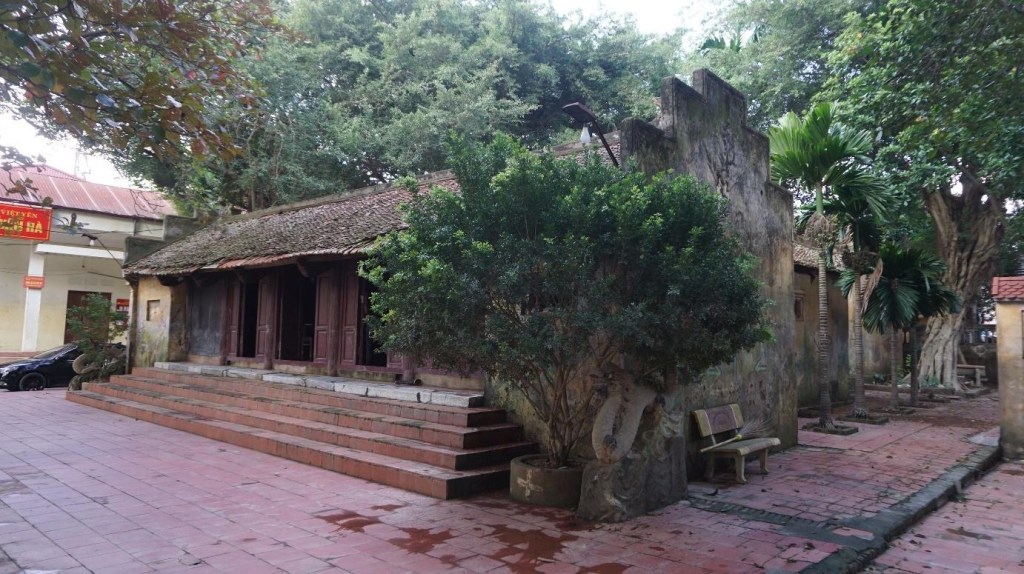
Main Temple of Van Village.
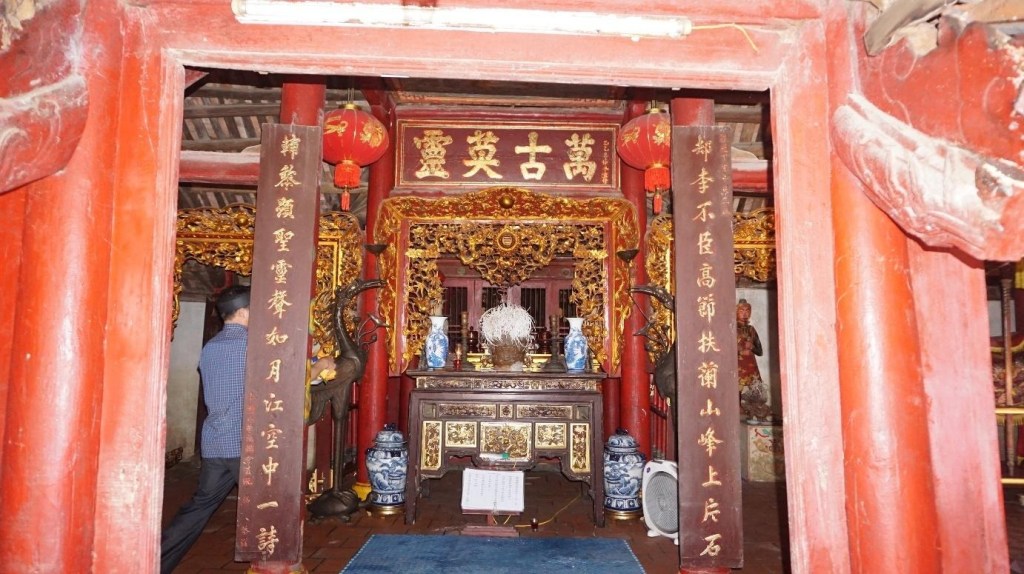
Sacrifice money at the Main Temple of Van Village.
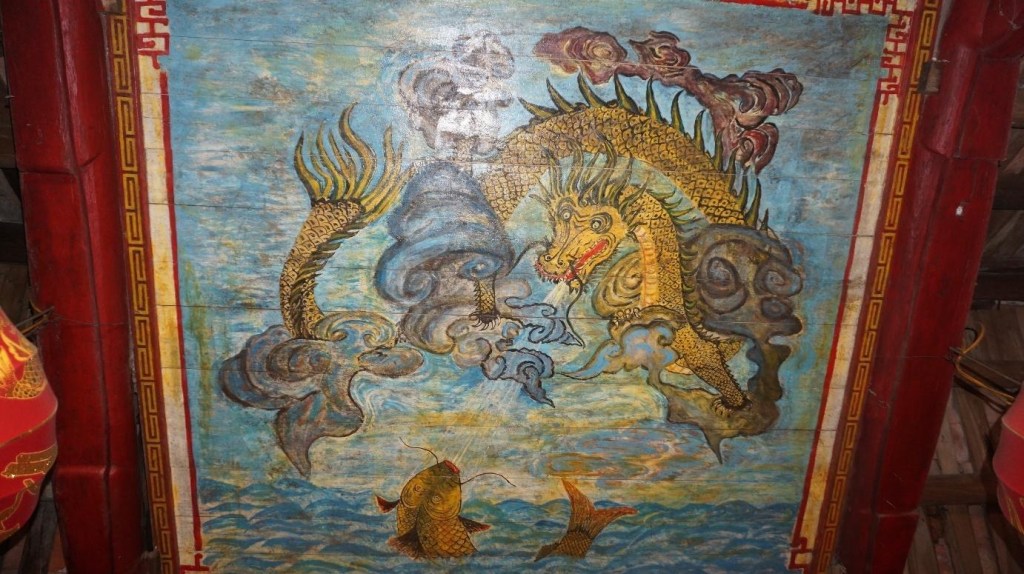
Ceiling painting of Dragon spewing water.
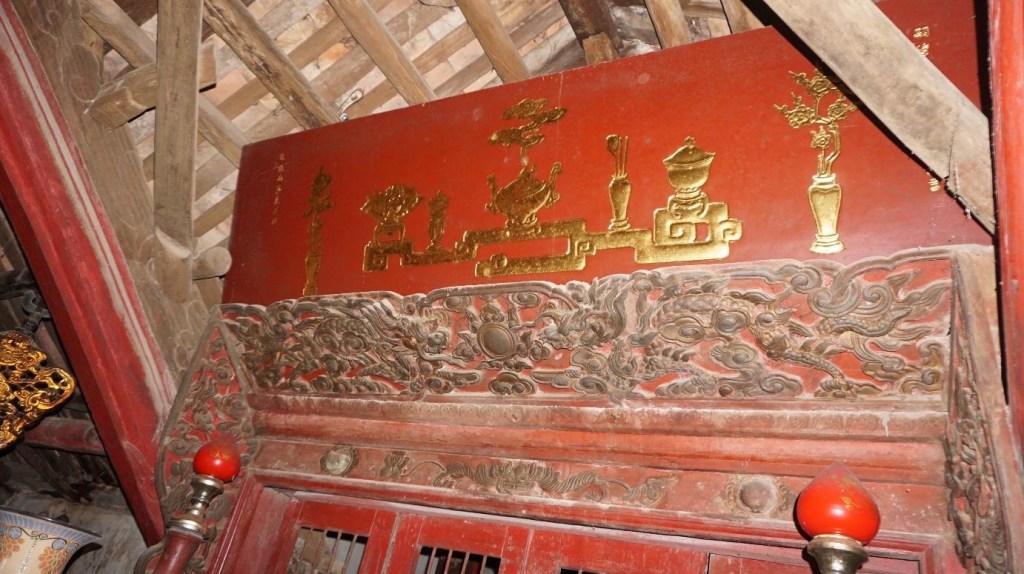
Wooden painting.
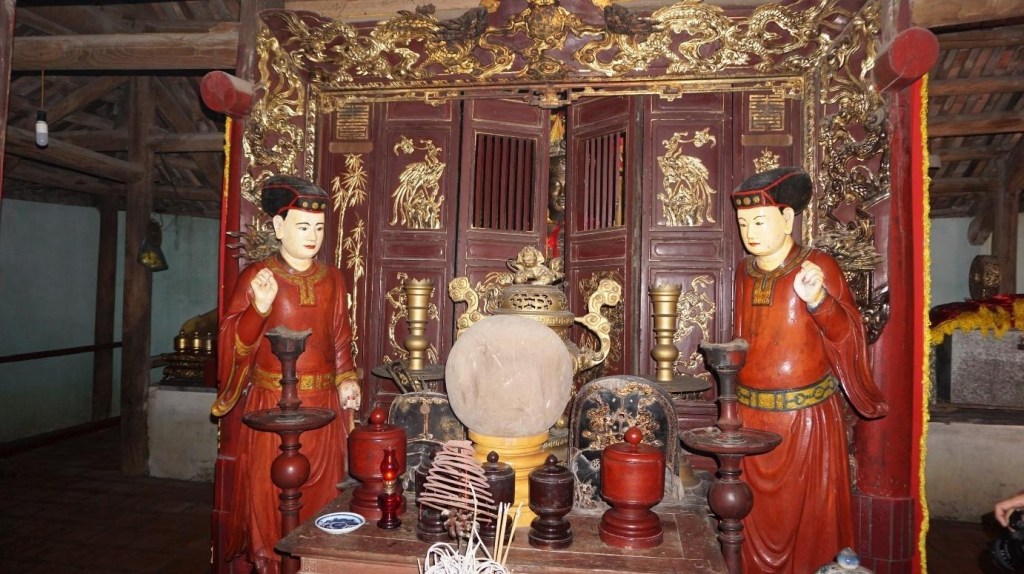
The main harem temple of Van Village.
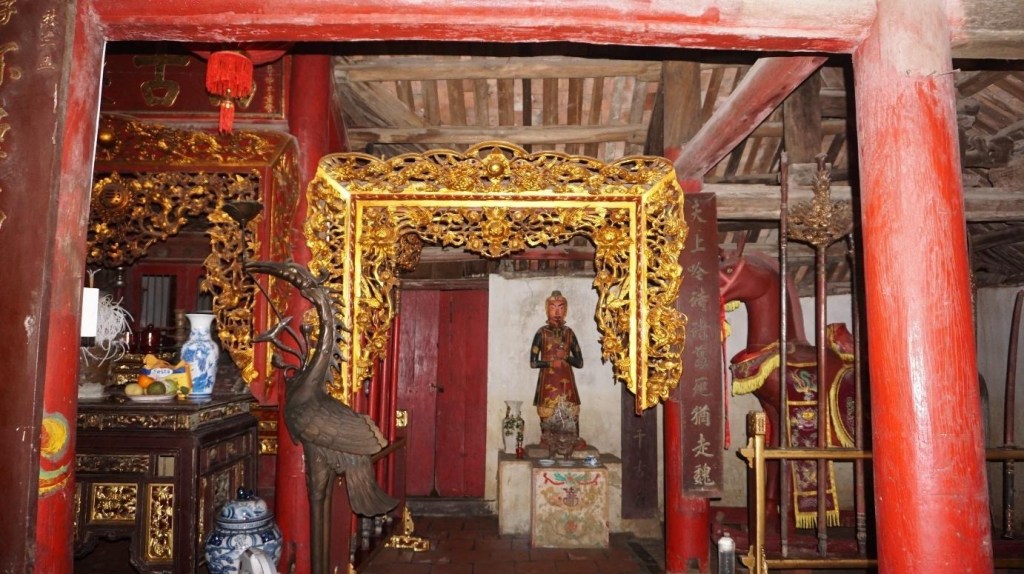
The morning glory pipe of Van Temple.
Source: https://bahviet18.com/