
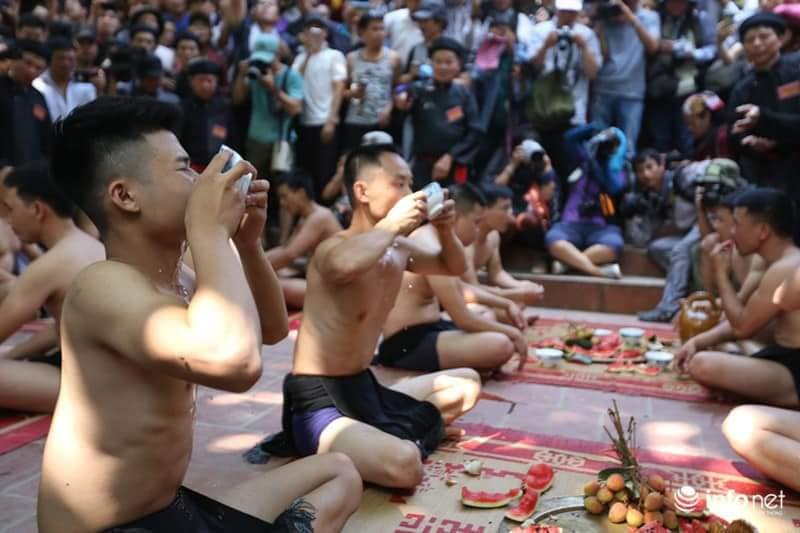
The appeal of Water-ball Wrestling comes from the combination of a heavy wooden ball, a slippery mud court, two pieces of shuttlecock and the goal of getting the shuttlecock into the hole. But behind the fierce fighting is a whole system of selection, taboos and rituals.
Sixteen balls representing the community
According to existing documents, the festival has 16 military balls, divided into two sides: Giap Thuong and Giap Ha, each side has eight people. They are healthy village boys, selected based on health, virtue and traditional conditions of the community.
Before the festival, the soldiers participate in reporting to the Saint and follow taboo regulations to keep their body and mind pure. The selection is not only to create an attractive match but also to confirm that the participants are representing the honor of the village and the village.
Mud yard about 200 square meters
The wrestling arena is located in front of Van Temple, about 200 m² wide according to press documents. Before competing, water is brought into the yard to mix with the soil to form a layer of mud. Mud reduces the ability to run fast, increases the difficulty of balancing movements and makes coordinated tactics more important than pure strength.
The yard has toilets on both sides. Each round ends when one side gets the ball into the hole according to rules. The number of rounds, time and method of determining results need to be according to the official announcement of the Organizing Committee of each festival, because details can be adjusted to suit actual conditions.
Wooden ball – sacred object and center of the fight
The ball is made of jackfruit wood, weighs about 20 kg according to festival documents in 2026. Before going onto the field, the ball is placed in the worship space and participates in related rituals. Therefore, it is both a competition tool and has symbolic meaning.
The round surface, heavy weight and layer of mud make the ball very difficult to grasp. The shuttler must hug, lift, pass, hold or create space for teammates. The audience often only sees a mass of people struggling, but inside are tactical decisions taking place very quickly.
Core principles of game rules
The goal is to gain control and send the ball down the hole in the direction specified for each armor. The players can compete directly, block the way and support teammates, but must comply with the instructions of the master of ceremonies, the referee or the Organizing Committee.
The festival should not be described mechanically in modern sports terms. The rules of the game are associated with rituals, drum rhythms and village rules. When creating explanatory graphics, it is necessary to consult local knowledgeable people to correctly show the location of the toilet pit, the direction of play and the daily sequence.
Skills and tactics
Soccer requires endurance, upper body strength, ability to hold on and safe falling skills. One person can do the shielding task, another person can slide down to lift the bridge, and the group behind can create the thrust. On mud, the formation changes constantly and keeping in touch with calls and signals is very important.
Practice requires an instructor, health check, and first aid plan. The festival is a legacy, but the safety of participants must still come first.
What your audience needs to know
Mud can shoot far away from the field; Viewers should secure cameras and phones and stay behind fences. Do not reach out, take a selfie stick or rush into the competition area. Do not cheer in a way that provokes excessive contact. The most beautiful moment is not just when the ball goes into the hole. The ceremony of presenting the Saint, the preparation of the field, the rhythm of the drums, the coordination of the players and the reaction of the community are all important parts that need to be observed and recorded.